Looking for a fun indoor activity your kids will love? LED gloves turn simple hand movements into colorful light patterns.
With just a small space and a bit of music, kids can explore movement, timing, and creativity in a fun and active way.
These activities are easy to start and work for a wide range of ages.
Easy Indoor Activity for Kids at Home
LED glove play is a simple way to keep kids engaged indoors. It combines movement, light, and creativity without needing a lot of setup.
You can use it for quick play sessions, family bonding time, or even as a creative break during the day.
What Kids Can Learn
While playing with LED gloves, kids build important skills:
- Hand-eye coordination
- Timing and rhythm
- Focus and control
- Creative thinking
- Confidence through self-expression
They also begin to understand cause and effect. When they change how they move, they see the light change right away.
What Are LED Gloves?
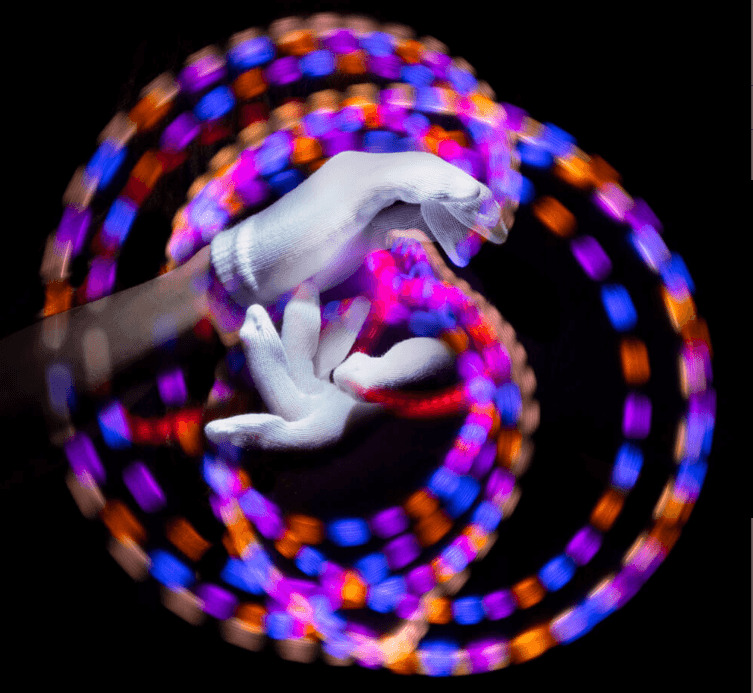
LED gloves are gloves with small lights on each fingertip. The lights can change color and flash in different patterns.
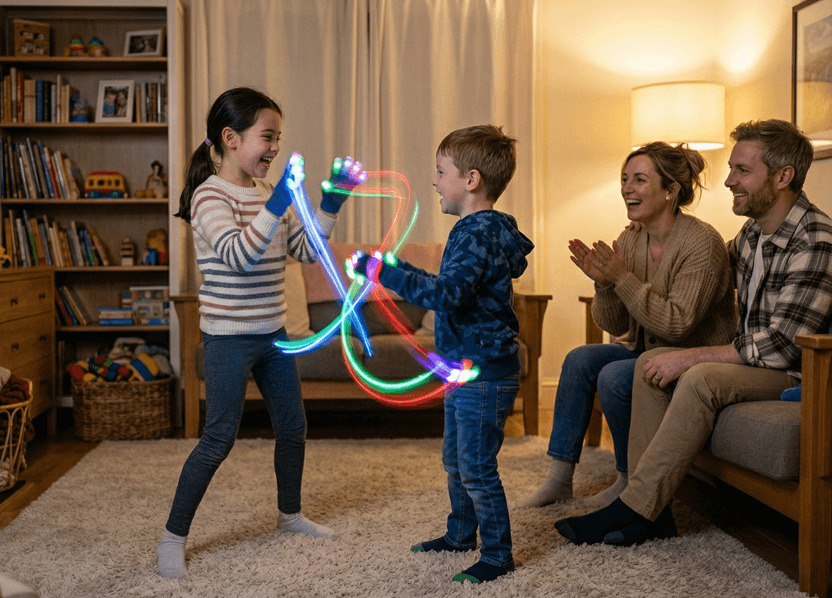
When kids move their hands, the lights create shapes and trails in the air. Slow movements create smooth lines. Fast movements create quick flashes.
This gives kids instant feedback. They can clearly see how their movements affect what they create.
Activity 1: Light Dance Party
This activity builds rhythm and coordination.
Turn off the lights. Play music. Let your child move their hands with the beat.
Try:
- Slow waves for smooth light trails
- Fast movements for quick flashes
- Pausing to match strong beats
Take turns leading. This helps kids practice listening and timing.
Activity 2: Follow the Leader
This activity builds focus and memory.
One person leads. The others copy the movements.
Start simple:
- Finger taps
- Small circles
- Slow waves
Then combine moves to make it more challenging.
Switch roles so each child gets a turn to lead.
Activity 3: Light Drawing Challenge
This activity builds creativity and visualization.
Ask your child to draw shapes using light.
Try:
- Letters
- Numbers
- Simple shapes
- Objects like stars or hearts
Move slowly so the shapes are easier to see.
You can also guess each other’s drawings. This adds a fun problem-solving element.
Activity 4: Build a Mini Light Show
This activity teaches planning and sequencing.
Work together to create a short routine.
Steps:
- Pick a song
- Choose a few simple moves
- Arrange them in order
- Practice and perform
Kids learn how to organize actions into a sequence. This builds early problem-solving and planning skills.
Activity 5: Record and Review
This activity builds observation and reflection skills.
Use a phone to record the light movements.
Watch the video together and ask:
- Which movements look smooth?
- Which ones are too fast?
- What can we change?
This helps kids think about how to improve their movements.
Tips for Safe Indoor Play
- Clear space before starting
- Keep lights away from eyes
- Take breaks when needed
- Use gloves that fit properly
A safe setup helps kids focus and enjoy the activity.
Make It Your Own
Encourage kids to experiment and explore:
- Try different colors for different moods
- Change speed and direction
- Combine moves in new ways
There is no single right way to use LED gloves.
Parent Guide
What you need:
- A pair of LED gloves
- A small open space
- Music (optional but helpful)
Time needed:
10 to 20 minutes
Best for ages:
6 and up (younger kids can join with supervision)
What your child will practice:
- Coordination and motor skills
- Focus and memory
- Creative expression
- Basic sequencing and planning
How to guide the activity:
- Start with simple movements
- Join the activity to keep kids engaged
- Ask open questions like “What happens if you move slower?”
- Let your child lead at times
Keep it fun:
- There is no right or wrong way to move
- Short sessions work best
- Celebrate effort, not perfection
Start Small and Build Skills
Kids do not need to learn everything at once.
Start with simple movements and practice for a few minutes each day.
Over time, movements become smoother and more controlled.
What starts as play can grow into a creative skill.