A kitchen table cluttered with cardboard scraps and glue is rarely seen as a training ground for professional skills. Meanwhile, it is precisely there that children master things that are later sold on the labor market at a higher value than is commonly thought. Below, we break down which specific habits grow out of joint creativity and how they convert into working from home.
Fun Family Craft Projects That Teach Kids Attention to Detail and Patience
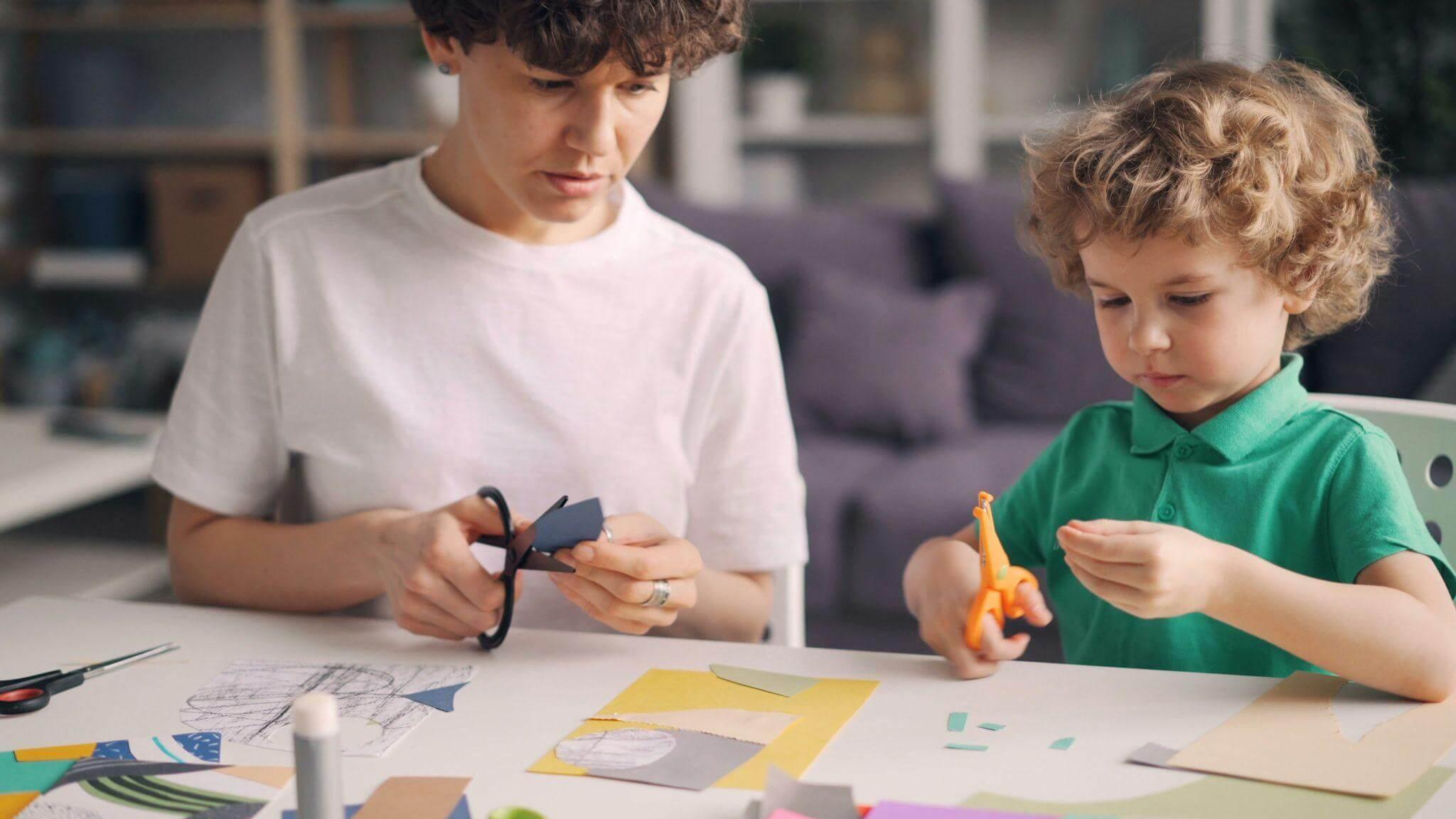
Attention to detail is not trained by lectures; it is trained by tasks where carelessness is immediately visible. Assembling a paper model with twenty parts, embroidering according to a pattern, or gluing a stained glass window from colored film: in all these cases, the child discovers the consequences of haste on their own, and the adult does not have to explain anything. That is why projects with clear instructions work better than free drawing when it comes to execution discipline.
Age dictates complexity. Ten parts and large motor skills are enough for a five-year-old; a ten-year-old can already handle a two-page diagram, and a teenager is more interested in a project with their own design and tolerances that they set themselves. The mistake of most adults is giving too simple a task out of caution, since a lowered bar kills interest faster than failure.
Patience grows out of projects that cannot be finished in one sitting. A multi-layered applique requiring drying between stages, or a homemade board game where the field is drawn first, then the cards, then the chips, accustoms one to a simple thought: the result appears through several work sessions. Given that remote employment is almost entirely built on long tasks without external supervision, the habit of returning to the unfinished is worth more than any ability to quickly execute instructions.
Essential Hand-Eye Coordination and Quality Control Habits Built Through Play
Fine motor skills are an obvious part of the equation. Scissors, tweezers, a needle, a brush with a fine tip: all of this calibrates the eye-hand connection more accurately than most sports activities. At the same time, the value lies not only in finger dexterity but also in the ability to maintain visual control over the process while the hands are busy with repetitive movement.
Materials that do not completely forgive mistakes work well. Paper, felt, polymer clay, and wooden blanks provide feedback instantly, but do not punish for the first inaccuracy with irrevocable damage to the product. Such a balance keeps the child in a zone where they both try and not abandon what they started.
Much more interesting is the second part, quality control. A child who has learned to check their own work before declaring it finished acquires a skill that is paid for separately in production. Introducing verification is easy:
- Comparing the finished part with a sample or diagram before assembly;
- Sorting defective elements into a separate box, not into the general pile;
- Final inspection of the product against a short list of three or four items;
- Recording what went wrong so as not to repeat it next time.
Such a ritual turns creativity into a semblance of mini-production, and children, oddly enough, perceive it with enthusiasm, not boredom.
How At-Home Family Projects Prepare Adults and Teens for Work-From-Home Craft Assembly Jobs
Florida is one of the states where home assembly and manual manufacturing are particularly widely represented: from jewelry workshops in Clearwater to carpentry and assembly sites in the Doral area. For parents who are thinking about part-time work in this niche, it is reasonable to first make sure that Jooble legit as a source of listings and only then look at the selection of work from home craft assembly jobs for a specific region. The platform gathers job openings from multiple sources on one page and verifies postings, blocking spam and phishing ads; in the home assembly niche, this is fundamental, as historically there have been many questionable schemes here.
Scale helps: daily, about 300,000 new vacancies appear on the platform across 66 countries, and the database remains at around 9 million listings. For job seekers, the service is free, and this removes the main barrier to entry for those trying a new direction without guarantees of results.
Skills accumulated over years of family creativity translate into the language of job listings almost word for word.
| Home craft habit | Employer wording | Where it appears |
| Following a written pattern | Ability to work from specs | Assembly and kitting roles |
| Sorting beads or components | Component sorting accuracy | Jewelry and small parts work |
| Checking finished pieces | Visual inspection skills | Quality control positions |
| Packing gifts neatly | Careful packaging and handling | Fulfillment and shipping tasks |
| Tracking supply levels | Basic inventory awareness | Home-based production contracts |
It is also worth taking a sober look at the conditions. Rates in this segment vary widely, order volume is seasonal, and some positions imply working on the employer’s site rather than strictly from home. Reading the job description carefully before applying saves time for both parties, and this is where that very habit of checking against instructions comes in handy.
Simple Organizing and Inventory Management Tips for Parents with Young Crafters
One aspect of the story that is often overlooked is the organization of space. A disorganized box with all the materials in it hinders enjoyment and productivity, while materials organized by category reduce preparation time by 50%. One of the first things to do is to create a crafting corner and give each category a permanent spot; labels for containers can be written and understood by a preschooler.

The next step is inventory tracking, and it isn’t as much fun as it sounds! The three-column table on the fridge, “material — still have — time to buy more,” is more of a lesson in planning than any discussion about frugality. Furthermore, when a child realizes that the glue is already running out, the child is starting to learn the link between doing and getting.
The storage of small parts requires special consideration. Boxes to hold tacks, pill organizers, and shoe boxes with dividers are very inexpensive and will work more effectively than special boxes. On the other hand, if you purchase a costly storage system before you have developed the habit of tidying up after yourself, you typically end up with a pretty box of the same general mess.
Turning Craft Time Into Career Groundwork
Joint creativity at the kitchen table gives children and teenagers precisely the set of habits that are later valued in remote work: accuracy, self-checking, inventory planning, and the ability to see long tasks through to the end. All of this accumulates imperceptibly, without a single talk about careers. Thus, the hours spent on glue and cardboard turn out to be an investment with a fairly predictable return.