Most parents considering Japan with their kids picture the bullet trains, temples, food, bright city streets, and the excitement of experiencing a very different culture. What may be less obvious is just how much children can learn along the way.
A family trip to Japan can turn everyday moments into lessons in language, geography, history, math, independence, and social awareness. Reading a train map takes planning. Buying a snack with yen puts mental math to work. A visit to a shrine or castle makes history tangible. Even figuring out how to order lunch when you don’t speak the language gives kids a chance to solve a real problem on their own.
None of this requires parents to turn a vacation into school. Japan simply gives families plenty of opportunities to let kids take part and figure things out for themselves.
For families interested in taking that learning further, the same experiences can also form the foundation of a school-organized trip. With more structure and preparation, the curiosity sparked by family travel can connect to deeper learning back in the classroom.
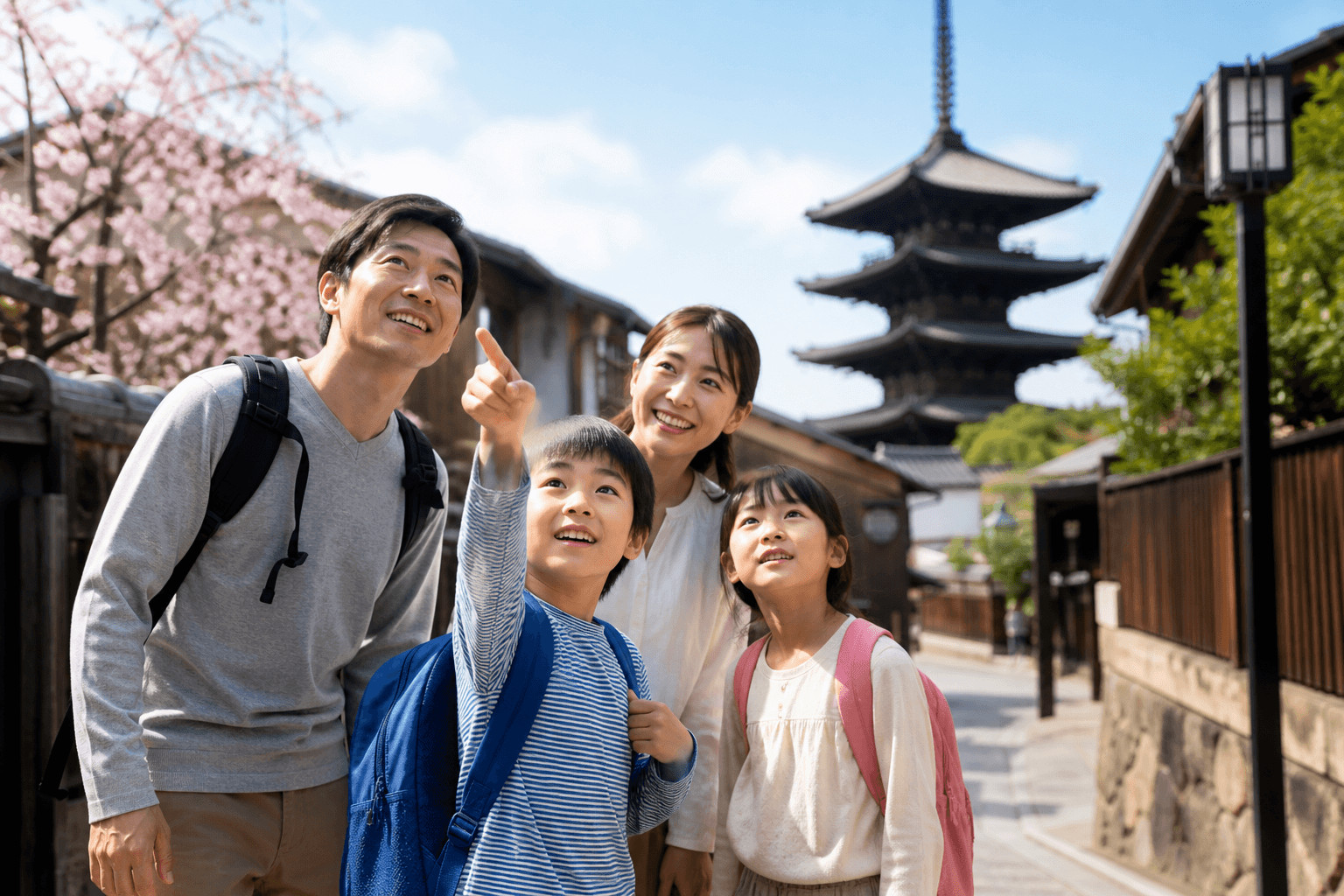
How Japan Turns Everyday Moments Into Learning
Japan works well as a living classroom because kids can participate instead of simply watching.
Riding the shinkansen is a good example. Children can help choose routes, check departure times, follow the journey on a map, and figure out which platform the family needs. Suddenly, time management and map-reading have a practical purpose.
Handling yen provides another easy opportunity. Give a child enough money to choose a drink or snack and they have to check the price, make a choice, pay, and see how much money they have left. Older kids can take responsibility for a small daily budget.
Ordering food presents a different challenge. A picture menu or ticket machine can help, but kids may still need to communicate across a language barrier. Learning a few Japanese words before the trip makes those interactions more rewarding. When communication doesn’t go perfectly, children get practice staying patient and finding another way to make themselves understood.
Shrines, temples, museums, and castles can bring history and culture into the conversation without requiring a formal lesson. At places such as Matsumoto or Himeji Castle, kids can look at the wooden towers, defensive walls, and moats and compare them with castles or historic buildings they already know.
A visit to a Shinto shrine creates different questions. Why are there torii gates? Why do people bow? What are the offering boxes for? Letting children notice first and asking what they think can lead naturally into conversations about belief and tradition.
Travel between Japan’s cities and smaller communities also gives kids plenty to observe. They can compare dense neighborhoods with quieter areas, look at how people use trains and bicycles, and notice how buildings fit into limited spaces.
Some of the most memorable lessons may be social ones. Children quickly notice people lining up for trains, removing shoes in certain places, keeping voices down on public transportation, and following customs they may not encounter at home.
Parents don’t need to explain every difference. Sometimes the best prompt is simply, “What did you notice?” It’s a simple approach that also fits with traveling mindfully with children, where slowing down gives kids more time to notice and process a new place.
Learning in Japan at Every Age
Children at different ages will experience Japan differently. A little planning can help parents give them enough responsibility to make the experience interesting without turning the trip into a series of assignments.
Ages 4 to 7: Follow Their Senses
For younger children, keep things simple and visual. A picture-based treasure hunt through a market could involve finding three types of noodles, two fruits, and a red lantern.
Letting a child choose a convenience-store snack and describe its taste or texture turns a treat into a small language exercise. A visit to Nara Park can lead to questions about deer, habitats, and why the animals have become such a recognizable part of the area.
At this age, there’s no need to pack in facts. Give kids something interesting to look for and see where their questions lead.
Ages 7 to 11: Give Them a Job
Primary-age kids can take on more responsibility. Put them in charge of following the map between two nearby places, let them pay for a purchase, or ask them to keep track of how many train stops remain.
Older children in this group might plan part of a day’s route with an adult checking their work before the family sets off.
Museums and historic sites also become more interesting when kids have a small task. Ask them to sketch one object that catches their attention or choose one thing they want to learn more about later.
These activities work because the responsibility is real. If they’re following the train map, the family actually needs to get somewhere.
Ages 11 to 14: Let Them Take the Lead
Early teens can handle more open-ended challenges.
Give them a budget for lunch and let them decide how to spend it. Ask them to plan a route between two sights. On another day, put them in charge of choosing a restaurant and figuring out how to get there.
A neighborhood photography project can give them a reason to look more carefully at architecture, signs, transportation, and street life. Back home, those photos can become a slideshow or simply give the family a reason to talk about what felt different.
Japan also gives teens plenty to compare with their own lives. How does public transportation differ? What customs did they notice in shared spaces? What surprised them about shops, schools, housing, or food?
These conversations can move beyond whether something seems “better” or “worse.” Ask why it might work that way and what that tells them about daily life in another country.
Across every age group, parents don’t need to run lessons. Give kids a useful question or responsibility at the right moment, then let the experience do most of the work.
What a School-Organized Japan Trip Can Add
A family vacation gives you the freedom to explore at your own pace. A school-organized trip can take some of those same experiences and add more background, discussion, and follow-up.
A family may visit a shrine because it is beautiful or historically interesting. On a school trip, students might arrive having already discussed its history and symbolism, then use what they observe as part of a larger project.
The same applies to museums, neighborhoods, historic sites, and transportation. A train journey can connect to geography and urban planning. A science museum can reinforce topics students have covered in class. A neighborhood walk can give students a chance to record how people use public spaces and transportation.
Schools can also make time for students to process what they see. A journal entry or small-group conversation at the end of the day can keep an interesting experience from becoming just another stop on a busy itinerary.
Some organized programs may provide experiences that can be difficult for a family to arrange independently, such as meeting local students, joining a calligraphy or language workshop, or learning directly from people who live in the communities being visited.
Traveling with classmates changes the experience too. Students have to keep track of their belongings, follow schedules, work with other people, and adjust to an unfamiliar setting. Those everyday responsibilities can build confidence alongside what they learn about Japan.
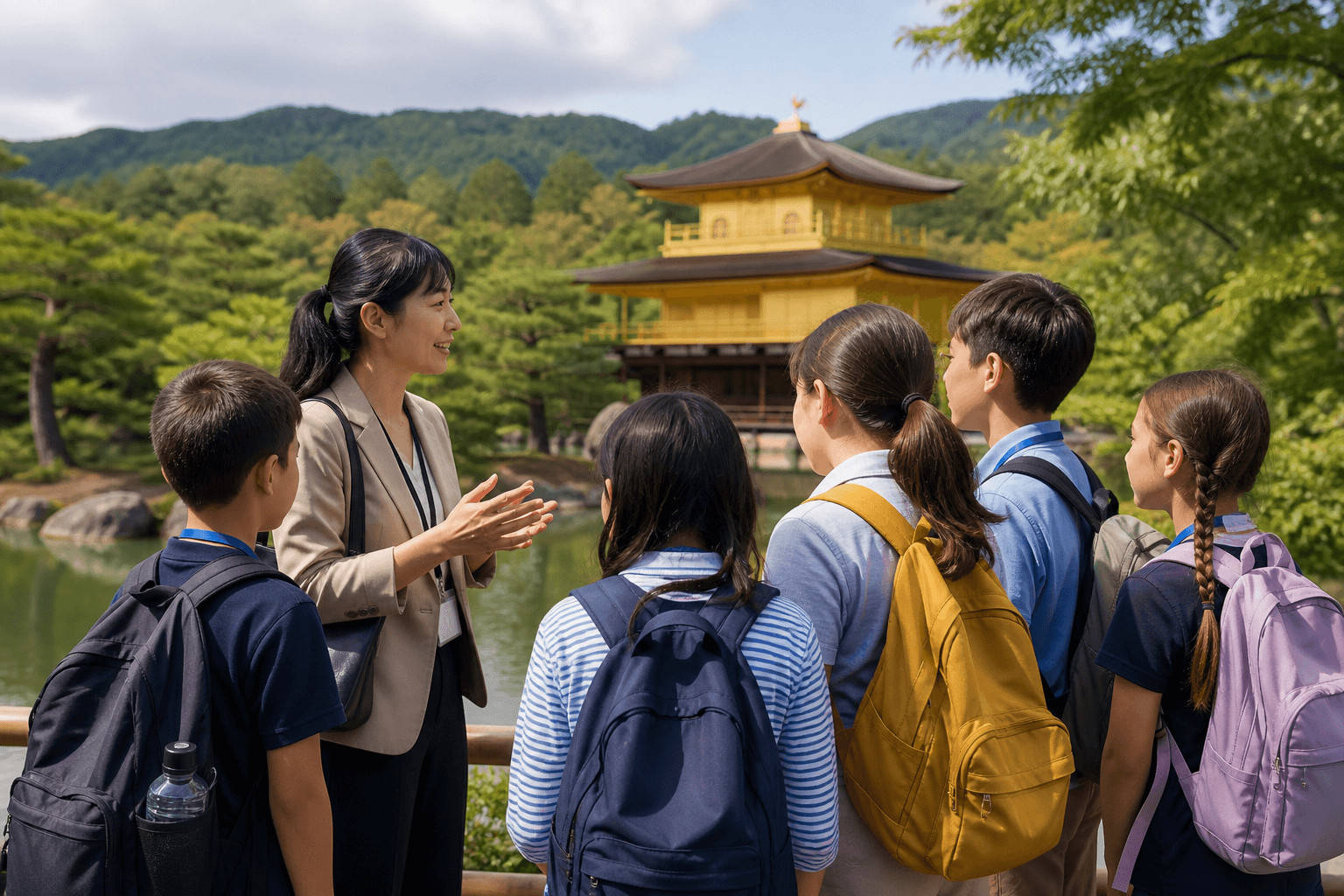
What a school-organised Japan trip adds to what families discover
Building on the Spark With Beyond Classrooms
Beyond Classrooms works with schools to design and run educational travel in Japan where activities are selected for their learning value and connected to preparation before departure and reflection after students return.
Before a trip, students can learn about basic Japanese customs, pick up useful language, and explore the history behind places they’ll visit. Having some context before arriving gives them more to look for once they’re there.
During the trip, activities can be adjusted for different ages and interests. A child who has already visited Japan with family may recognize familiar places but see them differently when the experience connects to a classroom topic or guided project. For someone visiting for the first time, a single experience may start a new interest in Japanese language, history, design, engineering, or food.
The learning doesn’t have to end with the flight home. Students can use photos, journals, sketches, and research to revisit what they experienced and share it with classmates and families.
Parents will have practical questions too. Safety, supervision, medical support, insurance, and the itinerary should all be explained clearly through the school, along with what students will be doing and learning during the trip.
Practical Steps for Parents
International school travel takes planning, especially when families need time to budget and schools need to organize transportation, accommodation, supervision, and activities.
A focused Japan trip can fit into roughly a week to ten days rather than trying to cover the entire country. Planning well in advance gives families more time to prepare financially and students more time to learn about the places they’ll visit.
Timing matters as well. A trip has more educational value when students can connect it to topics they’re exploring before or after they travel. Schools may also want to consider exam schedules, weather, and Japan’s busiest travel periods when choosing dates.
Parents interested in a school trip don’t need to arrive with a complete proposal. Starting the conversation can be as simple as asking whether teachers have considered Japan as a destination for hands-on learning.
If your family has already visited, tell the school what stayed with your child. Perhaps they came home interested in Japanese history, started learning a few more words, became fascinated by trains, or simply grew more confident finding their way around an unfamiliar place.
Those examples say more about the value of the experience than a folder full of vacation photos.
Japan Can Keep Kids Curious Long After the Trip
Some travel memories stick because they mark the first time a child handled something without much help. It could be finding the right platform in Tokyo, buying lunch with yen, trying a few words of Japanese, or figuring out a ticket machine.
Other memories start questions that continue after the trip. Standing inside a centuries-old castle might lead to a book about Japanese history. A favorite meal might lead to an afternoon trying to cook it at home.
Parents can follow whatever caught their child’s attention. Print their favorite photographs. Look up the story behind a place they loved. Find Japan on a map again and trace the train routes you traveled. If they became interested in the language, help them learn a few more words.
A school-organized trip can take that interest further by adding projects, discussion, and more opportunities to explore. Programs such as those developed by Beyond Classrooms offer one way for schools to connect the experience of travel with learning before and after the trip.
If kids come home more willing to read the map, try something unfamiliar, or solve a small problem on their own, the trip has taught them plenty.
And those skills will still be useful wherever the next family adventure takes them.