Knitting may look simple. Two needles, some yarn, and a piece of fabric that grows one stitch at a time. But when families knit together, something else begins to grow, too. The room feels quieter. Breathing slows. Even busy minds settle down.
For kids and parents alike, knitting offers a gentle way to pause during a full day. The steady rhythm gives hands something to do and gives the brain a break from screens, school stress, and long to-do lists. You are not trying to empty your mind. You are simply focusing on one small step at a time.
When you choose a project that fits your child’s age and skill level, the experience becomes even smoother. Clear steps and simple goals help everyone relax and enjoy the process. What starts as yarn and needles can quickly become shared calm, laughter, and real connection.
For ideas, try out these fun knitting activities for all ages:
Why Knitting Is a Great Mindful Activity for Kids and Parents
Just Enough Challenge Keeps Kids Focused
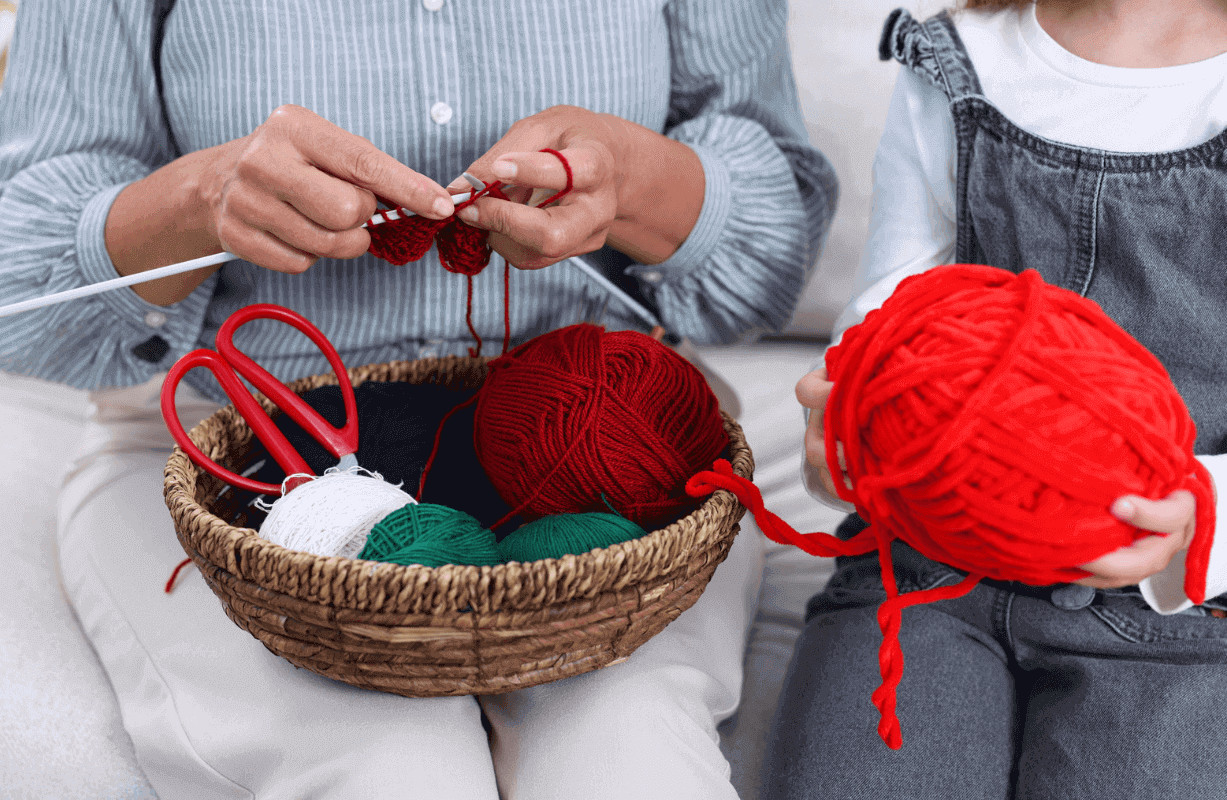
Knitting works well because it gives kids a small challenge. It is not too easy, but not too hard. This sweet spot helps children stay focused without feeling frustrated.
For younger kids, the challenge might be learning how to hold the needles or keep stitches even. For older kids, it could be trying stripes, simple patterns, or shaping. Each new skill builds confidence.
When hands stay busy, minds slow down. Kids often talk more freely while knitting. The pressure to make eye contact or sit still disappears. The yarn gives them something steady to focus on.
Rhythm and Repetition Help Everyone Relax
Knitting follows a pattern. Wrap the yarn. Pull it through. Slide it off. Repeat.
This simple rhythm helps the body relax. Many families notice that conversations become calmer during knitting time. Even five or ten minutes can shift the mood after a busy school day.
Repetition also helps kids feel safe. Predictable steps make the activity feel steady and clear. That sense of safety is one reason knitting works well as a screen free family activity.
The Mental Health Benefits of Knitting for Families
You do not need a science lesson to see the benefits. When kids make something with their hands, they feel proud. Stitch by stitch, they see progress. That visible growth matters, especially on days when school or friendships feel hard.
Knitting also teaches patience. Projects take time. Mistakes happen. Kids learn that they can fix problems and keep going. That lesson carries into other parts of life.
Yarn adds another calming layer. It is soft, warm, and easy to hold. When a child feels overwhelmed, focusing on how the yarn feels in their fingers can help bring their attention back to the present moment.
Crafting together also builds connection. Sitting side by side and working on simple knitting projects creates space to talk without pressure. Many parents find that their kids open up more when their hands are busy.
How to Start a Simple Family Knitting Habit
Keep It Easy to Begin
If knitting feels complicated to start, it will not become a habit. Keep a small bag with your family’s current project. Store needles, yarn, and simple instructions together. When everything is in one place, it is easier to say yes to a quick knitting session.
Choose beginner friendly knitting projects for kids. Scarves, dishcloths, or small squares are perfect starting points.
Use Short, Consistent Knitting Time
You do not need an hour. Try ten minutes after dinner or before bedtime. Even a few rows while dinner cooks can make a difference.
Set a simple focus for the session:
Feel each stitch.
Take slow breaths.
Count together.
Keep it light. Keep it simple. The goal is connection, not perfection.
Teaching Kids to Handle Mistakes with Confidence
Mistakes are part of knitting. A stitch slips. A row looks uneven. That is normal.
When your child notices an error, pause together. Decide what to do. Fix it slowly, or leave it if it does not matter. This teaches kids that small problems are not emergencies.
Learning to stay calm while fixing a mistake builds confidence. Over time, children begin to handle frustration better, both in crafts and in daily life.
Bringing Knitting Into Everyday Family Life
The best part about knitting with kids is how easily it fits into real life. A few rows after dinner. A quiet weekend morning project. A simple scarf worked on during a long conversation.
Knitting does more than create hats or blankets. It creates space. Space to talk. Space to sit close. Space to slow down as a family.
Mindfulness does not have to mean sitting still in silence. Sometimes it looks like yarn moving through small hands while a parent guides the next stitch. With every row, you are building patience, confidence, and connection that lasts long after the project is finished.
Easy Knitting Projects for Kids
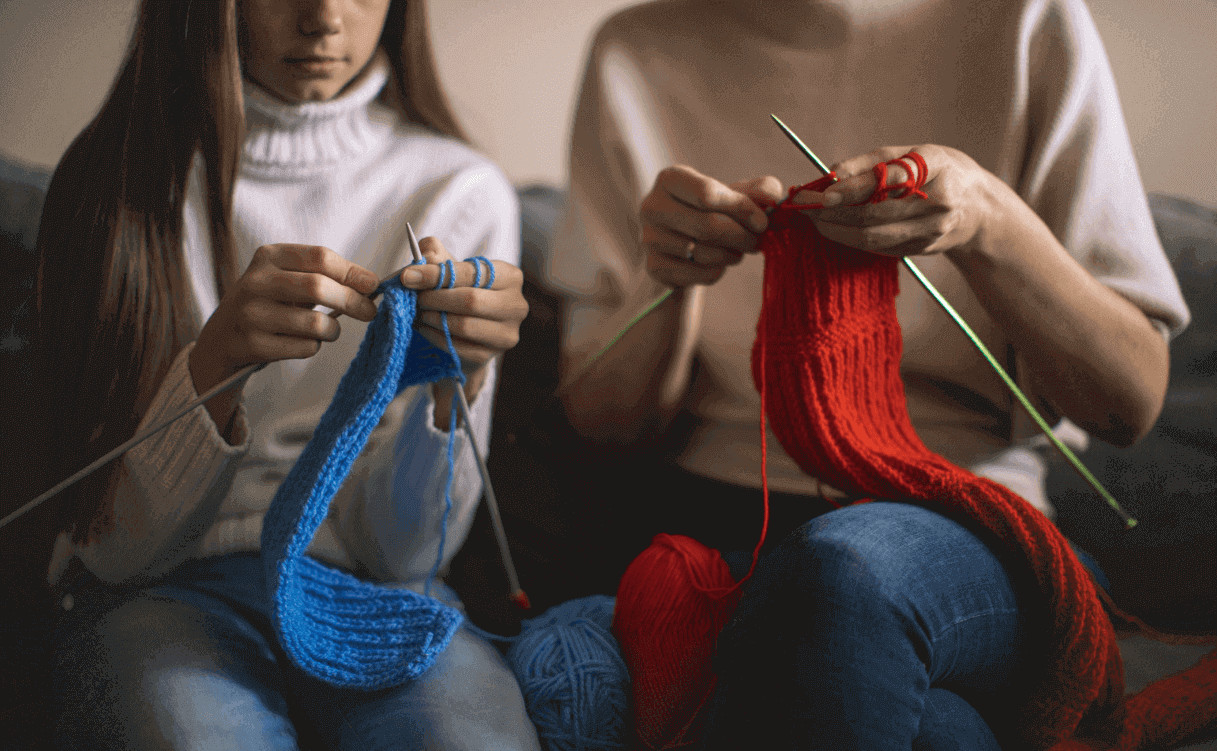
If you are looking for easy knitting projects for kids, start simple and focus on quick wins. Children stay motivated when they see progress fast.
Here are beginner friendly ideas that work well for most ages:
- Basic garter stitch scarf
- Small dishcloth square
- Simple headband
- Mini blanket squares
- Calm pocket square
Choose chunky yarn and larger needles for beginners. Bigger stitches are easier to see and hold. This reduces frustration and helps kids feel successful right away.
Keep projects short. Finishing something small builds confidence and encourages kids to try a bigger project next time.
1. First Stitch Family Dishcloth
Best for: Ages 6 and up with help
Why it works:
A small square project keeps things simple. Kids practice the knit stitch over and over, which builds confidence fast.
How to do it:
- Cast on 15 to 20 stitches
- Knit every row until it forms a square
- Bind off together
- Let your child pick the color
Family tip: Make one dishcloth per family member. Use them at dinner and celebrate your handmade table.
2. Cozy Beginner Scarf
Best for: Ages 8 and up
Why it works:
Scarves are simple and forgiving. Mistakes are hard to spot, which lowers stress.
How to do it:
- Cast on 15 to 25 stitches depending on yarn thickness
- Knit every row
- Stop when it feels long enough
Family tip: Work on scarves during family movie night. The steady stitching keeps hands busy and screens less distracting.
3. Calm Down Pocket Square
Best for: Any age
Why it works:
This small square can become a calm cloth for kids who feel overwhelmed.
How to do it:
- Knit a small square about 4 inches wide
- Use soft yarn with texture
- Let your child keep it in a backpack or bedside drawer
Encourage them to rub the yarn between their fingers when they feel nervous. It becomes a simple tool for self calming.
4. Family Patchwork Blanket Project
Best for: Ongoing family activity
Why it works:
Each person knits small squares at their own pace. Later, you sew them together into one blanket. It builds teamwork and patience.
How to do it:
- Agree on square size
- Let each family member choose colors
- Store finished squares in a shared basket
- Join them once you have enough
This project teaches kids that small efforts add up to something big over time.
Frequently Asked Questions About Knitting With Kids
What age can kids start knitting?
Most children can start learning basic knitting skills around ages 5 to 7 with help. At this age, they can practice holding needles and making simple stitches. Older kids often learn faster because their fine motor skills are more developed. The key is patience and keeping sessions short.
What is the easiest knitting project for beginners?
The easiest knitting project for kids is a simple garter stitch square. Knit every row until it forms a small square. This pattern is repetitive and easy to remember. Scarves and dishcloths are also great beginner projects because mistakes are not very noticeable.
Is knitting safe for kids?
Knitting is generally safe for children when supervised. Here are a few simple safety tips:
- Use blunt-tipped knitting needles for younger kids
- Choose wooden or plastic needles instead of metal for beginners
- Keep yarn and supplies stored in a bag when not in use
- Teach kids to sit while knitting to avoid accidents
- Avoid very long circular needles for small children
With basic supervision and clear rules, knitting can be a safe and calming activity for kids.
Make It a Family Tradition
Pick one simple project and set a regular knitting time each week. Keep it relaxed. Some weeks you will knit more. Some weeks less.
Over time, the yarn, the rhythm, and the shared effort become part of your family routine. The finished projects are special. The time spent together matters even more.
If you would like, we can now tighten this for SEO or turn one of these into a full standalone tutorial post.