
Parenting is a very rewarding role, but also one of the most challenging roles that a person can assume. Living between restless nights, caring, work-life solution, and making decisions all the time, many parents are almost constantly stressed out. Although stress is more likely to be discussed as a mental or emotional problem, it has such strong physical consequences as well, in particular on the health of the gut. According to recent studies, chronic stress and digestive health are so closely related that gut health is the factor of parental self-care that should not be disregarded.
This article discusses the impact of parenting stress on gut health, the science behind the gut-brain relationship, and the most practical methods for parents to recover and regain normalcy, including lifestyle changes, nutrition, and the enabling effect of carefully selected supplements as an addition to healthy daily practices.
Understanding Parenting Stress
Stress is the body’s natural response to perceived challenges. When stress occurs, hormones like cortisol and adrenaline are released, preparing the body for action. Short-term stress can be helpful, but chronic stress—common among parents—keeps the body in a prolonged “alert” state.
Common parenting stressors include:
- Lack of sleep
- Financial and career pressures
- Managing children’s emotional or behavioral needs
- Limited personal time
- Constant multitasking
Over time, unmanaged stress can contribute to fatigue, weakened immunity, mood changes, and digestive issues—largely because of its impact on the gut.

The Gut–Brain Axis: Why Stress Affects Digestion
The gut and brain are in constant communication through a system known as the gut–brain axis. This network includes:
- The vagus nerve
- Hormones and neurotransmitters (like serotonin)
- Immune signals
- Trillions of gut bacteria (the microbiome)
Interestingly, around 90% of serotonin, the “feel-good” neurotransmitter, is produced in the gut. When stress disrupts this communication pathway, both emotional and digestive symptoms can appear.
Chronic stress can:
- Slow digestion
- Alter gut motility
- Increase inflammation
- Disrupt the balance of beneficial gut bacteria
This explains why stress often triggers stomach discomfort, bloating, constipation, or diarrhea.
How Parenting Stress Disrupts Gut Health
1. Reduced Digestive Efficiency
The stress causes the body to switch to the fight-or-flight mode at the expense of the digestive system. This can lead to:
- Poor nutrient absorption
- Reduced digestive enzyme production
- Irregular bowel movements
2. Microbiome Imbalance
The constant stress has adverse effects on the gut bacteria, weakening the positive ones and allowing the harmful strains to multiply. This disproportion, called dysbiosis, is associated with inflammation, loss of immunity and digestive discomfort.
3. Increased Gut Sensitivity
The stress may increase gut sensitivity and parents may be more sensitive to particular foods. This can manifest itself in terms of food intolerances or unidentified digestive responses.
4. Weakened Immune Function
Gut-related imbalance because of stress can make people more vulnerable to disease and inflammation due to a large percentage of the immune system being found in the gut.
Signs Your Gut Health May Be Stress-Affected
Parents experiencing chronic stress may notice:
- Frequent bloating or gas
- Irregular bowel habits
- Acid reflux or indigestion
- Fatigue despite adequate rest
- Mood swings or anxiety
- Frequent colds or low immunity
These symptoms often occur together rather than in isolation.
How Parents Can Recover Gut Health
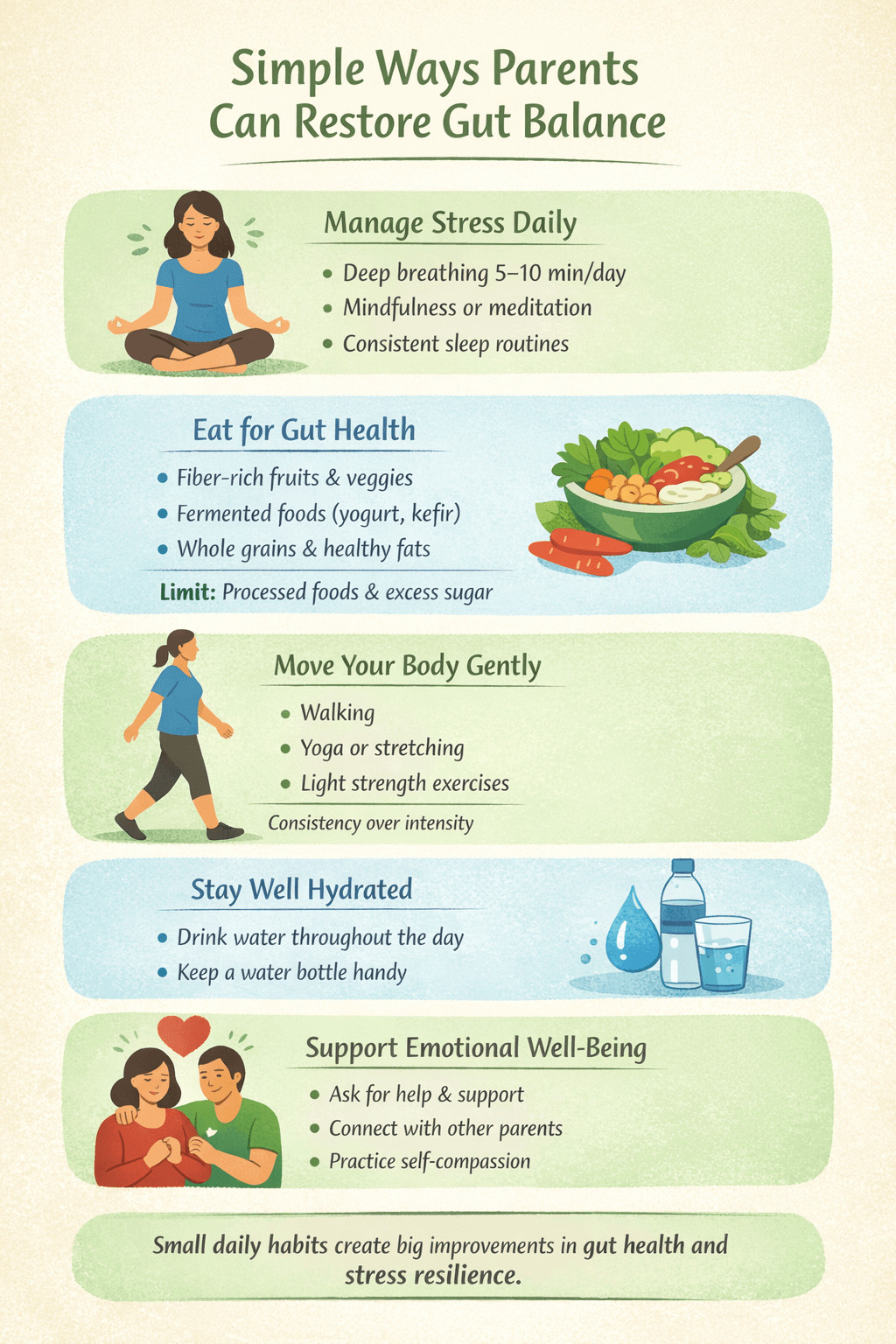
Recovering gut health requires a holistic approach—addressing stress, lifestyle habits, nutrition, and emotional well-being.
1. Manage Stress at the Source
Minor daily routines can do wonders:
- 5-10 minutes of deep breathing or meditation per day
- Meditation to minimize emotional burdens
- Adequate sleep routines, even if imperfect
- Asking for support from family or community
Stress-reduction has a direct effect on the gut-brain communication.
2. Eat for Gut Balance
A gut-friendly diet supports digestion and microbial diversity.
Focus on:
- Fruits and vegetables that contain a lot of fiber.
- Fermented products such as yogurt or kefir.
- Whole grains
- Fats Nuts, seeds, and olive oil are healthy
Limit:
- Highly processed foods
- Excess sugar
- Frequent fast food meals
Nutrition can stabilize the blood sugar, decrease inflammation, and maintain positive bacteria.
3. Move Your Body Regularly
Light and regular exercise enhances gastrointestinal circulation and resistance to stress. Gut motility and balance of the nervous system are helped by walking, yoga, stretching or light strength training.
4. Stay Hydrated
Proper hydration helps in digestion, absorption of nutrients and bowel movements. Most parents end up underhydrated unwillingly because of their hectic schedules.
Supplement Support: A Gentle Recovery Boost
Although a lifestyle change is necessary, certain supplements can be utilized to improve gut health and stress relief, particularly during stressful parenting stages. The purpose of supplements is to boost, rather than to substitute good health habits.
Helpful Options Include:
- Probiotics: Support healthy gut bacteria balance and digestive comfort
- Prebiotic fiber: Feeds beneficial bacteria and supports regularity
- Omega-3 fatty acids: Help manage inflammation and support gut lining health
- Adaptogens (like ashwagandha): May help the body adapt to stress and regulate cortisol
Even the reputable platforms like Health Insiders , Consumer Health Digest, Wellness Verge , and other product review websites like Health Web Magazine always recommend seeking a health expert before including supplements particularly in case you have a history of complications or are on any medications.
Final Thoughts
Stressful parenting not only influences your mood, but also your gut, your immune system and well-being. Knowing the relationship between digestion and stress enables the parents to be proactive in recovery efforts.
With the focus on stress management, healthy nutrition, light workouts, appropriate hydration, and conscious use of supplements, parents will be able to reestablish gut balance and develop more resilience. Helping your gut is not merely self-care but also an investment in your energy, emotional sanity, and future health.
A happier stomach translates to a less anxious mind, and a better base for handling the beautiful problems of parenting.