Ask any parent who has bought a cheap backyard trampoline and watched it sag, rust, rip its net, or lose tension in the springs by the second summer, and you’ll get the same answer: buying twice costs more than buying once.
So the real question isn’t whether your kids want a trampoline. They do. The question is which one you should put in your backyard, and what separates a purchase you’ll regret in eighteen months from one your kids will still be using when they’re teenagers.
Below are the questions worth asking before you hand over your credit card.
What Size Trampoline Does My Yard (And My Family) Need?
Most Canadian backyards can fit something in the 8 to 14-foot range. Who’s bouncing matters as much as the footprint.
A 10-foot round trampoline suits one or two younger kids and works well in smaller yards. A 12-foot model gives older kids and tweens room to actually move without crashing into the net every two seconds. A 14-foot model handles multiple jumpers and teenagers who want to learn flips and seat drops.
Don’t forget vertical space. A jumping kid needs roughly 7 metres of overhead clearance, which means no overhanging branches or power lines, and nothing like the corner of a deck roof in the way.
Should I Worry About The Springs?
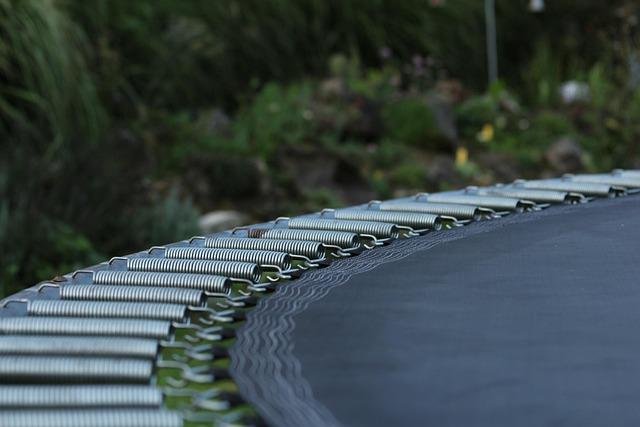
Yes, and this is where most cheap trampolines fail. Traditional coil springs sit between the jumper and the frame, and they account for a meaningful share of trampoline injuries when a foot slips through a gap or a hand catches metal.
Two design approaches solve this. The first hides the springs under thick padding well outside the jump zone. The second replaces coil springs with leaf springs, which are flat and tucked away from where feet land. If you’ve been looking at trampolines from Vuly, their Thunder line uses the leaf-spring approach and is one of the few outdoor trampolines built around it. Their Ultra range uses traditional coils but with the springs covered by deep, UV-treated padding. Both setups beat a budget trampoline where the springs are exposed and rust by year two.
Will It Actually Survive A Canadian Winter?
This is where a lot of imported trampolines fall apart. A steel frame that’s fine in Brisbane or southern California will rust within two seasons in Ontario or Quebec, where you’ve got freeze-thaw cycles, road salt drift, snow load, and months of sub-zero temperatures to deal with.
The things to look for: galvanised steel frames (ideally double or triple-galvanised), UV-treated mats and padding, weather-resistant netting, and welded joins rather than bolt-on extensions that loosen over time. If a manufacturer can’t tell you the frame treatment, treat it as a red flag.
Some families take their trampoline down for winter. Others leave it up year-round and let kids bounce in snow gear, which is a perfectly valid choice if the build quality supports it.
How Much Does The Safety Net Matter?
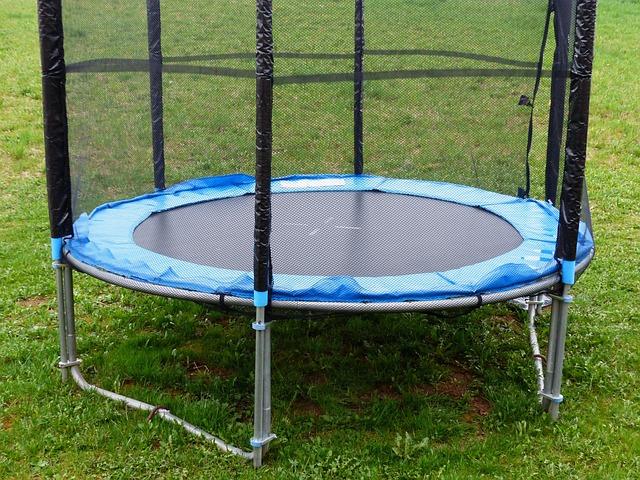
Falls off the trampoline cause more serious injuries than the bouncing itself. So the net is doing real work.
Weave tightness is the first thing to check. A 3mm weave keeps small fingers and toes from poking through, while a looser 10mm weave can let a hand catch awkwardly. Pole positioning is the second thing. Poles should curve away from the jump surface or sit outside the net entirely, so a kid who hits the net hard doesn’t slam into a pole behind it. The entryway design is worth checking too. Zipperless self-sealing entries are easier for kids to use than zippered doors, and they don’t fail when the zipper teeth eventually wear out.
A good net should also be replaceable. Even quality nets will need swapping after several seasons of UV exposure, and you want a manufacturer who sells replacement parts rather than forcing you to buy a whole new trampoline.
What About Weight Limits?
Manufacturers list maximum user weight, but that number can be misleading. A trampoline rated for 150kg single-user might struggle with two 50kg kids bouncing together because the impact force generated mid-bounce is several times the static weight.
If multiple kids will use it, prioritise models with higher weight ratings and reinforced frames. Two-ring frame designs, where the metal frame doubles up around the perimeter, hold up better under repeated heavy use than single-ring budget models.
Is Assembly Something I Can Handle Myself?
Older trampolines were a nightmare to put together. Modern designs have improved a lot. Tool-free or click-together assembly systems let two adults assemble a trampoline in a few hours rather than a full weekend. If the product page doesn’t mention the assembly method, assume it’s the old bolt-by-bolt approach and budget accordingly.
You should also check whether the manufacturer offers paid installation. For families who’d rather skip the build entirely, that option is worth knowing about.
What Warranty Should I Expect?
Three years on the frame is standard for quality trampolines. Anything less suggests the manufacturer doesn’t trust their own build. Springs, mats, nets, and padding usually carry shorter warranties of one to three years because they wear faster, and some brands offer extended warranty options on the soft components for an additional fee.
Read the warranty terms carefully. Some warranties exclude weather damage, which is meaningless for a product that lives outdoors year-round. Others require professional installation or annual maintenance to stay valid.
How Much Should I Spend?
Entry-level backyard trampolines start around $400 to $500 in Canada. Mid-range models with better safety features and stronger frames sit between $1,000 and $1,700. Top-tier models with leaf-spring designs and longer warranties run $2,000 and up.
The honest advice: skip the bottom tier unless you genuinely only need it for one summer. The build quality difference between a $450 trampoline and a $1,200 trampoline is enormous, and the cheaper one will usually need replacing within two or three seasons. You’ll spend more long-term replacing junk than you would buying something solid once.
Final Thoughts
A trampoline is one of the few backyard purchases that competes with screens. Kids who’d otherwise be on a tablet will spend hours outside on a good one. That makes it worth treating like a real investment rather than a toy: check the frame, check the springs, check the net, check the warranty, and buy from a brand that builds for outdoor conditions rather than a generic import that looks the same in product photos but falls apart by year two.