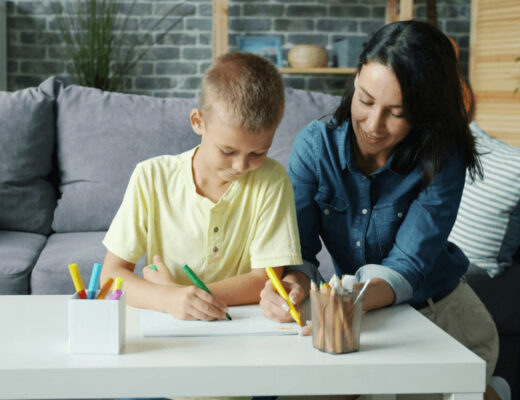
Most kids will sit down with a paint-by-numbers kit, stare at all those tiny numbered sections, and feel a flicker of doubt before they’ve even cracked open a paint pot. That moment is where your support counts most. Finishing a first canvas doesn’t just teach a child to paint, it teaches them to stick with something difficult until it turns into something they’re proud of.
Here’s a walkthrough of exactly how to help kids complete their first paint by numbers canvas without frustration taking over, from picking the right kit to knowing when to step back.
Choosing the Right Kit Sets the Whole Project Up
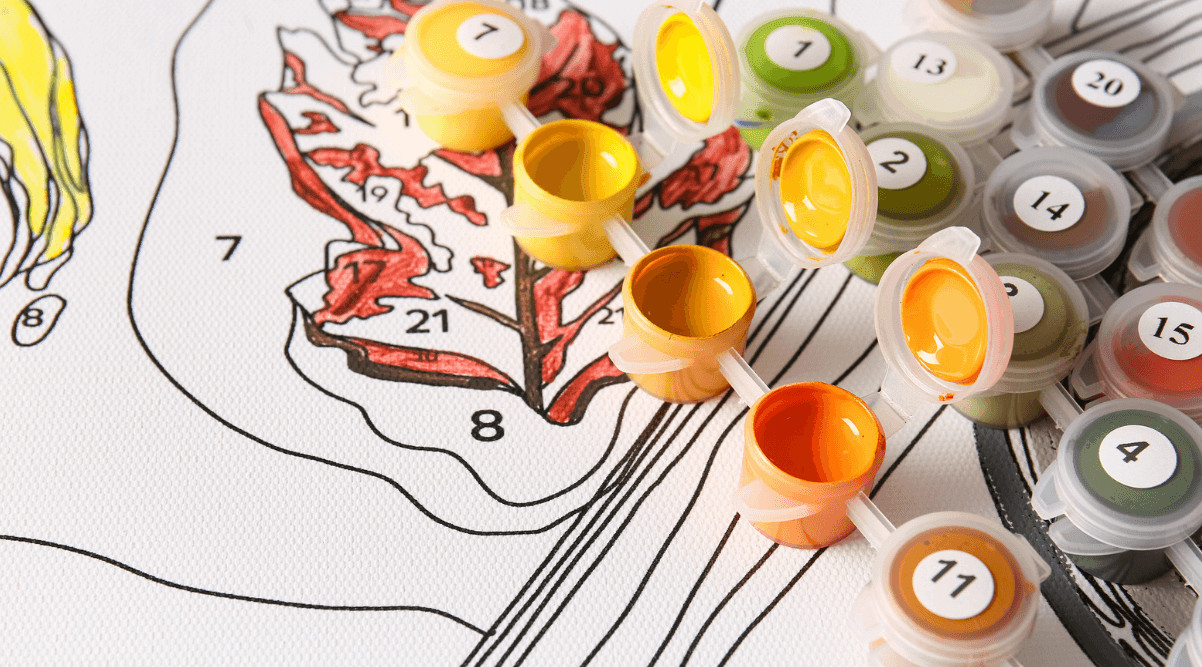
The single biggest reason kids abandon their first canvas is a kit that was too complex for where they are. Paint by numbers art kits for kids are designed with simpler number systems, bolder color areas, and smaller color palettes than adult kits, so a child isn’t immediately drowning in forty shades of blue and sections the size of a pencil eraser.
When you’re picking a kit for a younger painter, look at the total number of colors and the average size of each painted section. Twelve to fifteen colors with large, clearly bounded regions gives a child a real shot at seeing genuine progress within a single sitting; that matters enormously for keeping their enthusiasm alive through the whole project.
What “Beginner-Friendly” Actually Means for Young Painters
A beginner-friendly kit needs large numbered regions that small hands can fill without constantly bleeding into neighboring sections. Canvases around 8 by 10 inches or 12 by 16 inches tend to hit the sweet spot – big enough to feel like a real project, manageable enough to finish in a weekend or two before momentum dies.
Check whether the kit has pre-printed numbers directly on the canvas rather than on a separate reference sheet, because flipping back and forth adds cognitive load that slows younger kids down noticeably.
Canvas quality matters too; a thicker canvas resists buckling when paint goes on in multiple coats, which prevents the headache of a warped surface that won’t sit flat on the table. And match the subject to what your child actually loves – animals, space, a favorite scene, because personal connection to the image is one of the strongest predictors of whether they’ll see it through.
Matching the Kit to Your Child’s Age and Attention Span
Age ranges on kit packaging are a starting point, not gospel. A focused seven-year-old can often handle something labeled for ages eight and up; a distracted ten-year-old might genuinely do better with something simpler. The more useful gauge is how long your child typically sustains a quiet, focused activity – coloring, building, reading – before needing a break.
If that window runs about twenty to thirty minutes, look for a kit where visible progress is achievable in that timeframe. That usually means fewer than sixteen color sections and a central image that reads as recognizable even when it’s only half painted.
Kids get a powerful shot of motivation the moment they can look at an unfinished canvas and see what it’s going to become. Structure those early sessions so that moment arrives quickly – ideally within the first hour across one or two sittings – and you’ve already solved most of the dropout problem before it starts.
Setting Up the Workspace Before the First Brushstroke
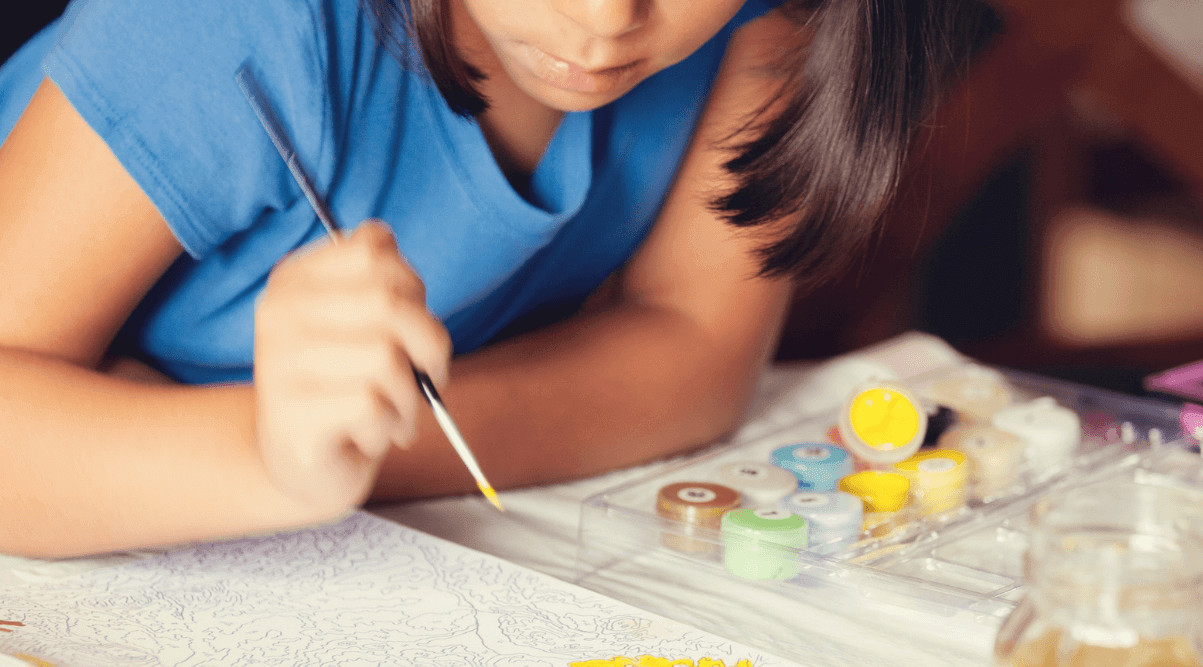
A chaotic setup creates a chaotic experience. Before your child touches a brush, spend five minutes together organizing everything on the table. Arrange the paint pots in numerical order left to right so nobody’s hunting for color seven while that section dries wrong.
Set out a small cup of water, a folded paper towel, and two brushes, one fine-tipped for detail work, one slightly wider for filling bigger areas. Tape the canvas lightly to a piece of cardboard or a clipboard so it doesn’t slide around, and make sure the light hits it directly so the printed numbers are readable without squinting.
But honestly, the setup ritual can become part of the fun. It signals to your child that this is a real activity worth taking seriously, not just something to rush through. A few minutes of prep feels slow at the start; it removes the small frictions that pile up into genuine frustration later on.
Working Through the Canvas One Section at a Time
Teach your child to work systematically rather than jumping around randomly. A good method is finishing all sections of one color before moving to the next, then closing that paint pot to prevent it from drying out.
This builds visible momentum fast; your child can point to the canvas and say, “I’ve finished every number three section,” which is a concrete, satisfying checkpoint. Show them how to apply a first coat lightly and let it dry before adding a second, especially over darker base colors where the printed numbers still show through underneath.
Some parents worry about perfectionism creeping in, the child gets upset that a line isn’t straight or that paint bled slightly into an adjacent section. The trick is reminding them gently that small overlaps vanish into the finished image when you step back three feet. A completed canvas they’re proud of beats museum-quality precision on a first attempt, every time.
Keeping Momentum Going Across Multiple Sessions
Few kids finish a paint by numbers canvas in one sitting, and that’s fine. Projects that don’t get finished usually lack a clear plan for coming back. After each session, leave the canvas somewhere visible, propped against a wall in your child’s room or on a shelf they walk past daily. Out of sight really does mean out of mind for most kids this age.
Before wrapping up each painting session, help your child decide exactly which section they’ll start with next time. That small act of pre-deciding removes the activation energy barrier that makes picking the project back up feel like an effort. You can also photograph the canvas at the end of each session and show it to your child at the start of the next one; that before-and-after comparison makes it clear how much they’ve already done, and how close they are to the finish line.
Conclusion
Helping kids complete their first paint by numbers canvas is less about technique and more about structure, patience, and smart setup. Choose a kit scaled to your child’s age and attention span, get the workspace organized before you start, teach a color-by-color approach, and keep the canvas visible between sessions so momentum doesn’t quietly evaporate.
The payoff – a finished piece of art your child genuinely made – is worth every careful step. And that first completed canvas tends to matter far more than the second or third, because it’s the one that proves to your child they can carry something through from start to finish. That confidence carries well beyond the art table.