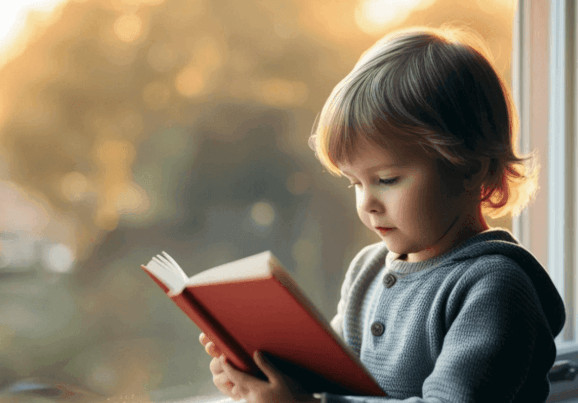
A personalized children’s book lets your child become the main character in their own story. Instead of reading about someone else’s adventure, your child sees their own name, interests, and sometimes even their appearance inside the book.
Research published in First Language (Kucirkova, Messer & Sheehy, 2014) found that preschoolers who read personalized books built new vocabulary at a much higher rate than children reading non-personalized stories. An observational study by the same research group also showed that children and parents smiled and laughed more often when reading personalized books together, even compared to reading the child’s favorite traditional book (Kucirkova, Messer & Sheehy, 2013, Journal of Early Childhood Literacy).
For parents, the practical question is simple. How do you actually make a personalized book for your child?
Today, there are several ways to create a personalized book for your child. Some methods are fast and inexpensive. Others produce higher-quality keepsakes but take more time and money. This guide explains the three main approaches and the trade-offs between cost, speed, creative control, and print quality.

Option 1: Make a Personalized Children’s Book with AI Tools
The fastest and cheapest method. Google’s Gemini Storybook feature, launched in August 2025, generates a 10-page illustrated digital book from a single text prompt. You type something like “Create a storybook about a 5-year-old who discovers a secret garden with her cat,” and Gemini returns a complete book with illustrations, text, and optional audio narration.
The entire process takes under two minutes. It supports 45+ languages and multiple art styles (watercolor, claymation, pixel art, comic book, and more). You can upload your child’s drawings or family photos for Gemini to use as creative source material.
Google’s official Storybook page (gemini.google/overview/storybook) walks through the process. The feature is free for all Gemini users 18 and older, available on web and mobile.
ChatGPT with DALL-E offers a more manual but flexible alternative. You write the prompts, control the story structure, and generate illustrations one page at a time. The workflow looks like this: first, prompt ChatGPT to write a children’s story for a specific age group, with your child’s name and details baked in. Ask it to break the story into pages with one scene description per page. Then feed each scene description to DALL-E (built into ChatGPT Plus) to generate the matching illustration.
You can iterate on both text and images individually, which gives you page-level control that Gemini Storybook currently lacks. The downside is time: a 10-page book done this way takes 30 to 60 minutes of active prompting and revision, compared to Gemini’s 90 seconds.
Midjourney produces higher-fidelity images than DALL-E for most illustration styles, particularly watercolor, painterly, and storybook-classic aesthetics. It requires a paid subscription (starting at $10/month) and runs through Discord, which adds friction.
The bigger challenge is character consistency. Getting the same child character to look identical across 10 or more illustrations requires careful use of style references, character sheets, and seed parameters. Experienced users solve this by generating a character reference sheet first, then referencing it in every subsequent prompt. Expect a steep learning curve.
For parents willing to invest the time, a hybrid approach works well: use ChatGPT or Claude to write and refine the story text, then generate illustrations in Midjourney or DALL-E, and assemble the final book in Canva (free tier) or Adobe Express for layout and export to PDF.
A detailed walkthrough of combining multiple AI tools for children’s book creation was published by SentiSight (sentisight.ai) in early 2025. Several YouTube creators have documented the process end to end, including tutorials on maintaining character consistency across pages.
Advantages of the DIY route:
Free or very cheap. Maximum creative control when using ChatGPT. Instant results. Good for one-off bedtime stories or testing ideas.
Limitations worth knowing about:
Character consistency across pages remains a big challenge. Your child’s appearance may shift subtly from one illustration to the next (hair, clothing, accessories). You cannot edit individual pages in Gemini Storybook; changing anything regenerates the entire book. The output is a 10-page digital file, not a professionally printed and bound book.
And as Publishers Weekly reported in August 2025, the Society of Children’s Book Writers and Illustrators (SCBWI) and several authors raised concerns about the ethical implications of AI-generated children’s content, particularly regarding the livelihoods of human illustrators and the quality of stories written without editorial oversight.
For parents who enjoy the creative process and want a quick digital story, this route works. For a keepsake gift or something that will survive repeated readings by small hands, a digital-only PDF has obvious limits.
Option 2: Commission a Custom Illustrator
This is the premium route. You hire a writer, an illustrator, or both, and get a fully original book made from scratch. This is the approach that has been used for decades if not longer.
According to industry pricing data compiled by US Illustrations (usillustrations.com, 2026), a children’s book illustrator typically costs $100 to $500 per illustration, with a full picture book running $1,800 to $12,000.
Rates depend on the artist’s experience, the complexity of each illustration, and whether you want full-page spreads or spot illustrations. Established or award-winning illustrators charge $20,000 to $30,000+ for a complete book, according to SCBWI-informed pricing guidelines published by With Love Laxmi (withlovelaxmi.com, 2025).
A standard 32-page picture book with 15 full-page illustrations from a mid-level professional might run $3,000 to $9,600. Add character development sheets, cover design, and print-ready layout, and total costs climb further. The process typically takes 2 to 6 months from concept to finished files. Finding illustrators on Behance, Dribbble, or the SCBWI network is the standard approach.
Advantages:
Total creative originality. Professional quality. Human editorial judgment on story, pacing, and age-appropriate content. A genuine art object.
Limitations:
Cost. Time. Project management overhead (you are effectively acting as art director and publisher). Not practical for most parents looking for a birthday gift next week.
Option 3: AI-Powered Personalized Children’s Book Services
A middle path has recently emerged: companies that combine AI personalization with professional editing and quality control. You upload a photo, choose a story and illustration style, and receive a printed, bound book.
Several services operate in this space. Leo Books is one of the leaders in the space and creates a personalized 30-page illustrated book from a photo of your child (and optionally their pets, siblings, or favorite toys). You choose from multiple story templates (or suggest your own!) and many illustration styles, preview the result, and order a softcover or hardcover.
Digital downloads start at $8.99; printed hardcovers run $54.99. The turnaround from photo upload to preview is minutes, with physical books shipped after printing. Childbook.ai offers a similar concept with a template-based approach and Canva/Adobe Express integration. Wonderbly, one of the legacy entrants, uses a name-insertion model with pre-designed illustrations rather than fully custom art companies like Leo Books provide.
Advantages of this category:
Professional print quality without the $5,000+ price tag. Photo-based personalization means the character actually looks like your child. Fast turnaround. No creative or technical skills required on your part.
Limitations:
Less creative control than a fully custom commission. Story options in many legacy services are curated rather than unlimited. Art quality varies by service: go with proven and trusted ones.
The deciding factor for most parents is the intersection of three variables: how much time they have, how much they want to spend, and whether the book needs to survive as a physical keepsake. For a quick bedtime story, Gemini works. For a heirloom-quality original, hire an illustrator. For a personalized printed book that balances quality, speed, and price, services like Leo Books fill the gap.
Tips for Creating the Best Personalized Children’s Book
A few principles apply across all three approaches.
Write for your child’s actual reading level. A book for a 3-year-old needs short sentences, simple vocabulary, and rhythm. A book for a 7-year-old can handle longer narrative arcs. If using AI tools, specify the target age in your prompt: services like Leo Books will automatically adjust the narration styles based on age. Research by Bus, Van Ijzendoorn & Pellegrini (1995), published in Reading Research Quarterly, established that shared book reading supports vocabulary development and emergent literacy, but only when the content matches the child’s developmental stage.
Include things your child will recognize. Their pet’s name, their favorite color, a place they love. Kucirkova’s research demonstrates that personalization beyond just the child’s name (incorporating real appearance, interests, and personal details) produces stronger engagement and vocabulary effects. The self-reference effect, a well-documented cognitive phenomenon, means children remember and process information better when it relates to themselves (Klein, Rozendal & Cosmides, 2002).
Prioritize print for young children. Kucirkova and colleagues found that the vocabulary acquisition benefit of personalized books was stronger in print than in digital formats. Children learned roughly the same number of new words from personalized and non-personalized digital books, but the personalized advantage appeared clearly in print.
Think about re-readability. Young children read favorite books dozens of times. A book that is genuinely personalized, with a story that reflects real elements of the child’s life, has more re-read value than a generic adventure with a name swapped in.
How to Choose the Right Method
If you are unsure which option is best, use this quick guide.
Choose AI tools if:
- You want a fast bedtime story
- You enjoy experimenting with prompts
- A digital book is enough
Choose a custom illustrator if:
- You want a completely original story
- Budget is not a major constraint
- You want a true heirloom-quality book
Choose AI personalized book services if:
- You want a printed book quickly
- You want the character to resemble your child
- You prefer a simple process without technical work
For many families, AI-powered personalized book services offer the best balance between quality, speed, and cost.
Frequently Asked Questions
What is a personalized children’s book? A personalized children’s book is a story customized with a child’s name, appearance, interests, or personal details, making them the main character of the narrative.
Do personalized books help children learn to read? Research published in First Language (2014) found that preschoolers acquired significantly more new vocabulary words from personalized book sections compared to non-personalized sections. Shared reading of personalized print books supports vocabulary development and emergent literacy.
How much does a custom illustrated children’s book cost? A full custom children’s book with professional illustrations typically costs $1,800 to $12,000 depending on the illustrator’s experience, art style, and number of pages. Award-winning illustrators can charge $20,000 or more.
Can I make a personalized children’s book for free? Google Gemini Storybook generates a free 10-page illustrated digital book from a text prompt. ChatGPT with DALL-E can also produce story text and illustrations at no cost on the free tier, though with usage limits.
What is the best age for personalized children’s books? Personalized books are most effective for children ages 2 to 10, when they are most responsive to narrative-based learning and identity formation. The self-reference memory effect has been documented in children as young as 2.
Are printed personalized books better than digital ones? Research from Kucirkova and colleagues suggests that vocabulary acquisition benefits from personalized books are stronger in print format. Print books also serve as lasting keepsakes that children can hold and return to.
How do AI personalized book services work? Services like Leo Books and similar platforms use AI to generate custom illustrations based on uploaded photos and selected story templates. You upload a child’s photo, pick a story, and receive a personalized illustrated book as a digital file or printed hardcover.
How long does it take to make a personalized children’s book? AI tools like Gemini Storybook produce a digital book in under 2 minutes. AI-powered print services like Leo Books generate a preview in minutes with physical delivery in days. Commissioning a custom illustrator typically takes 2 to 6 months.
Conclusion
Each approach to making a personalized children’s book for your child serves a different purpose.
AI tools make it easy to create a quick digital story in minutes. Commissioning an illustrator produces a completely original book but requires significant time and budget. AI-powered personalized book services sit in the middle, offering fast creation with professional printing and photo-based personalization.
For most families, the right choice depends on three things. How much time you want to spend, how much you want to invest, and whether the book should last as a physical keepsake.
No matter which method you choose, the most important part is the connection your child feels with the story. When children see themselves in a book, the experience becomes more personal, more memorable, and often more meaningful than reading a generic story.
A well-made personalized book can become one of the stories your child asks to read again and again.