If you spend your weekends covered in sawdust, it won’t be long before your kids want to join in. Building something together gives kids a chance to learn how tools work and solve problems along the way. But a working garage is also full of sharp blades, heavy machinery, and dangerous materials.
Before your kids pick up their first tool, workshop safety for kids has to come first. Here are five simple rules to get them started.
1. Set Up a Dedicated, Kid-Safe Workshop Zone
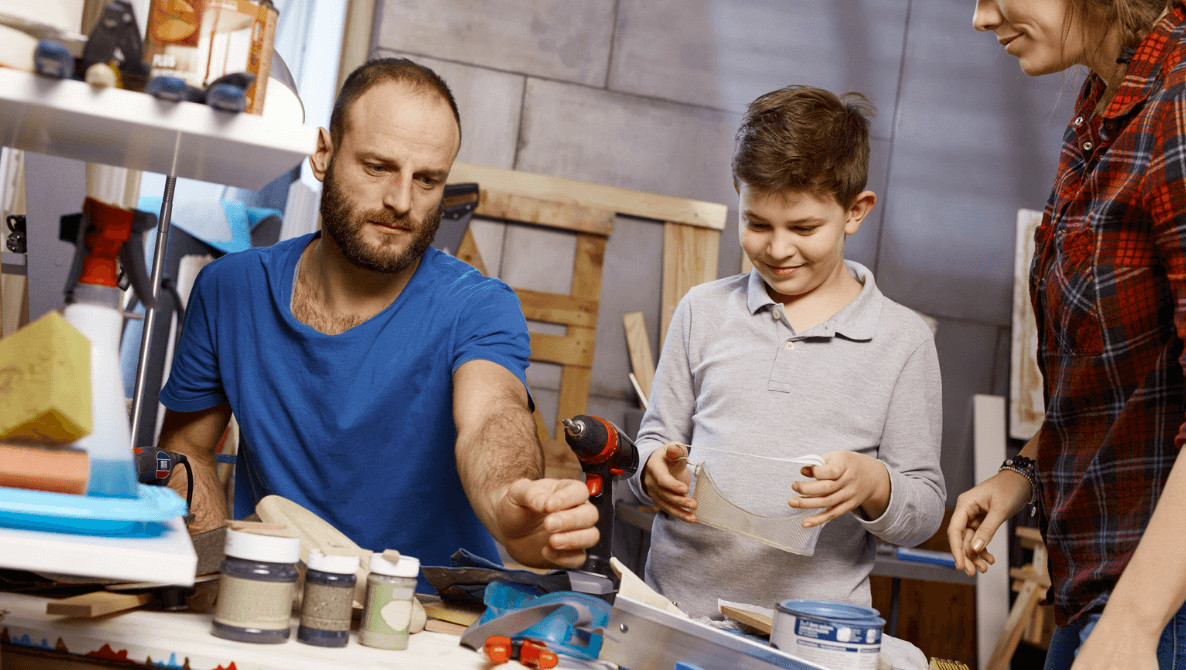
You can’t expect a child to walk safely through a room with extension cords stretched across the floor, sawdust covering the ground, and power tools left plugged in. You need to set up a space just for them before they ever pick up a tool. A dedicated, child-height space adjacent to your heavy-duty work benches gives kids a safe, stable place to practise measuring and sanding away from dangerous machinery.
Outline a “no-go” zone around stationary tools, such as the table saw and drill press, with brightly coloured floor tape. This helps kids understand where they can and cannot stand. Always unplug and secure power tools when they’re not in use, and keep sharp tools and hazardous materials out of reach.
2. Personal Protective Equipment (PPE) is Non-Negotiable
Safety gear is a must, even for the smallest and seemingly harmless tasks. Before handling materials, children should wear properly fitted safety goggles to protect their eyes from splinters, dust, and debris. If loud machinery is running nearby, hearing protection is essential too.
Clothing matters as much as goggles. Keep kids in snug sleeves, tie back long hair, take off dangling jewellery, and have them wear closed-toe shoes so a dropped tool or stray nail can’t reach bare feet.
Make wearing safety gear a habit you never skip. If your child removes their goggles, stop the activity until they’re securely in place again. Most importantly, lead by example. If your kids see you taking shortcuts without your own safety glasses, they’ll be tempted to do the same.
3. Start with Real (But Age-Appropriate) Tools
Plastic toy hammers are terrific for toddlers, but when your child is ready to help with family crafts, you can introduce real tools suited to their age and abilities. A small hammer, for example, can help them learn how to use tools responsibly.
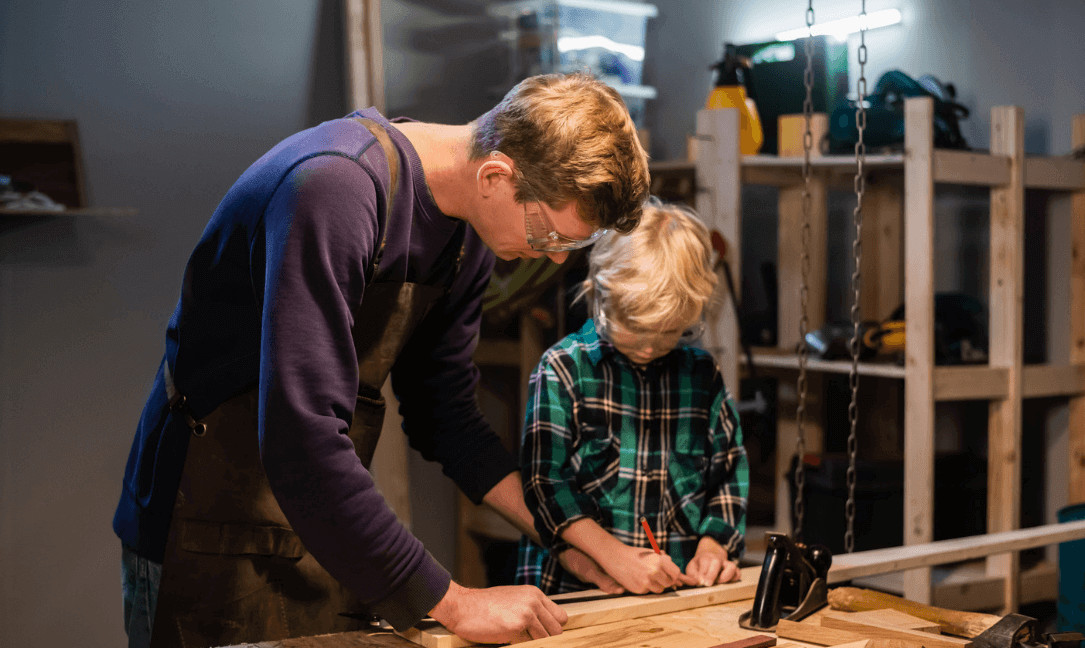
Start with simple tasks like measuring wood, sanding edges by hand, or driving nails into a piece of soft scrap pine. Secure the wood with clamps and supervise them closely. Once they can handle basic tools safely, you can introduce more advanced hand tools and show them how to use each one.
4. Teach Respect, Not Fear
You want your kids to understand the dangers of the workshop without being scared of the environment. Explain why a tool is dangerous in clear, calm terms.
Instead of simply yelling, “Don’t touch that!” when they reach for something sharp, say, “That blade is very sharp because it needs to cut through wood. That’s why we always keep our hands away from it.”
Kids are more likely to follow safety rules when they understand the reasons behind them. They’ll learn to approach each task with care rather than fear.
Keep a stocked first aid kit within easy reach of the workbench, and make sure your kids know where it is and to tell you straight away if they get a scrape or splinter. Stay in the workshop with them the whole time, and keep roughhousing and running out of the space altogether.
5. Keep the First Projects Short and Highly Rewarding
Children have short attention spans, and nothing kills their enthusiasm faster than a complicated, multi-weekend build that requires hours of tedious sanding.
Choose projects they can complete in a single afternoon for their first few workshop experiences. Simple projects like a wooden name sign, a basic bird feeder, or a toy car ramp made from pre-cut wood give kids something to show off without overwhelming them.
They’ll leave the workshop with something they helped build and be excited to return for the next project.
Good workshop safety for kids doesn’t mean mastering every tool on day one. Give them a safe place to work, start with small projects, and let them get their hands dirty. Chances are, they’ll soon be asking when they can help out again.