A hospital-grade breast pump rental and a high-suction wearable pump are not interchangeable at every stage of a low-supply journey. A rental pump is often the safer choice when milk production is being established after birth, when a baby cannot nurse directly, or when a clinician is managing a serious supply concern.
A wearable pump becomes more useful once supply has a baseline and sticking to the routine is the hard part. This guide compares clinical timing, output checks, insurance and rental friction, transition signs, and where a wearable option may fit.
General information only, not medical advice.
Table of Contents
- Start with the supply stage before choosing a pump
- Compare hospital rental pumps and high-suction wearable pumps
- Check rental channels, insurance, and daily friction
- Know when a wearable pump becomes safer to consider
- Conclusion
Start with the supply stage before choosing a pump
The term hospital-grade is used loosely in breast pump marketing. In clinical settings, a rental pump usually means a multi-user, closed-system machine built for heavy use and frequent sessions. Convenience is not why families end up with one. The reason is usually more urgent. Nursing is not working yet, and the care plan needs consistent stimulation while milk production is being established.
That matters most when the baby cannot nurse directly because of prematurity, NICU care, illness, or latch barriers. It also matters when milk has not come in as expected, and the care team is trying to increase stimulation early. If pumping is replacing many feeds, or if output changes are being monitored by a lactation professional or pediatric team, the rental pump is no longer just another home appliance.
In these cases, the pump is part of a clinical plan. The weight, noise, tubing, and wall outlet are annoying, but they are not the main issue yet. The question is whether the body is getting frequent, consistent stimulation while the feeding plan is still fragile.
A hospital-strength breast pump in a wearable format can help later, but it should not be treated as an automatic replacement for a clinical rental during the highest-risk window. The safer question is not which pump is stronger on paper. It is what stage your supply is in right now.
Compare hospital rental pumps and high-suction wearable pumps
The real comparison is not only suction strength. It is how each pump handles the trade-off between clinical consistency and daily repeatability. A pump can be powerful and still be hard to use often enough. A wearable pump can be easier to repeat and still be the wrong choice too early.
| Decision point | Hospital rental pump | High-suction wearable pump |
| Main role | Initiating or rebuilding supply under clinical pressure | Maintaining a routine once supply is more predictable |
| Setup | Wall-powered motor, tubing, separate collection kit | In-bra motor and collection cups |
| Best fit | NICU, delayed lactation, severe low supply, medically directed pumping | Workdays, older siblings, errands, and sessions that would otherwise get skipped |
| Weak point | Low mobility and a more visible setup burden | Fit, alignment, and bra support can affect output |
| Choose this when | A clinician is still guiding initiation, rebuilding, or medical monitoring | Supply is more predictable, and missed sessions are becoming the bigger problem |
Low supply often turns pumping into a math problem. The plan may call for eight or more sessions, hands-on pumping, or a power-pumping block. In that kind of week, the pump that produces slightly more in a single controlled session may not be the pump that a parent can use often enough.
Still, output matters. If a wearable gives noticeably less milk than the rental pump across several sessions, do not ignore that pattern. Compare sessions at the same time of day, with the same flange size, and after similar rest and hydration when possible. One bad session does not prove much. A repeated drop deserves attention. If the plan has moved into personal-use pumps, the eufy breast pump is a more relevant place to compare wearable formats, parts, and setup styles.
Check rental channels, insurance, and daily friction
Families often start researching hospital-grade breast pump rentals after a nurse, pediatrician, or lactation consultant mentions one. The process can involve a prescription, a durable medical equipment (DME) provider, a hospital lactation office, pickup or shipping, and personal collection kits that are separate from the rental motor.
The boundary is worth keeping clear. A home pump with hospital-grade suction is still a personal-use pump. A hospital rental pump is usually a clinical, multi-user rental. Insurance often treats those categories differently, even when the suction language sounds similar.
| What to confirm | Why it matters |
| Rental channel | Ask whether the pump comes through a hospital lactation office, DME supplier, pharmacy partner, or insurer-approved vendor |
| Insurance paperwork | Prescription, medical note, diagnosis code, or proof of need |
| Coverage window | Some rentals are approved only for a limited number of weeks or months |
| Kit costs | Tubing, flanges, bottles, and personal collection kits may be billed separately |
| Home wearable boundary | Personal-pump coverage, not always rental replacement |
The cost is not only financial. A rental pump can shape the whole day. You need a chair, an outlet, tubes, bottles, and a clear surface. Setup and parts washing take time, and the parent stays tied to one location. The emotional cost can linger too, especially when every session still feels like a medical task long after the crisis has passed.
None of that makes a rental pump bad. It can be the right tool at the right time. But if supply has stabilized and the parent is missing sessions because the setup is too heavy, too loud, or too isolating, the balance shifts. If you are comparing personal-use options during a prime day breast pump sale, remember that a high-suction wearable may support a more repeatable home routine, but it does not automatically replace a clinical rental when documentation, infant status, or medical monitoring still drives the plan.
Know when a wearable pump becomes safer to consider
A transition away from a rental pump should be gradual. Before returning it, test the wearable on one lower-risk session and compare output, comfort, nipple condition, and how the breast feels afterward. The safer window usually appears when daily output has a pattern, the baby is gaining as expected, pumping response is predictable, and a clinician agrees that maintenance has replaced urgent supply initiation.
If the baby is still in the NICU, weight gain is uncertain, or output is falling week over week, the rental may still belong in the routine. The transition can also be partial. Some parents keep the rental for the first morning session or one power-pumping block, then use a wearable for work breaks or evening sessions.
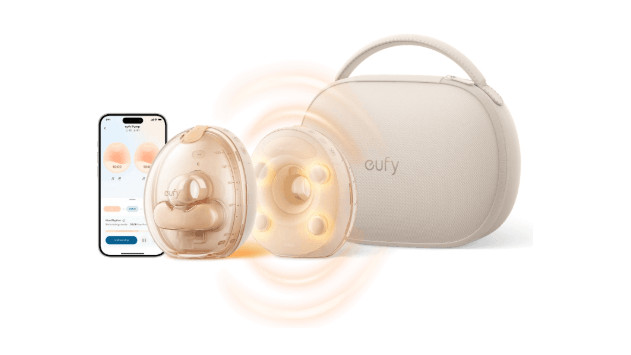
At that maintenance stage, product details matter only if they solve a real session problem. The eufy Wearable Breast Pump S2 Pro pairs 300 mmHg suction with a hands-free wearable design for sessions that are otherwise easy to miss. HeatFlow™ 2.0 warmth is designed to support letdown, while VibraPump™ massage focuses on comfort and emptying during demanding sessions. The 360° see-through design with nipple light makes alignment easier, and the wireless charging case helps on days away from an outlet. Fit still decides the result, so compare similar sessions before returning a rental.
Conclusion
When supply is still being established under medical pressure, a hospital rental pump is usually the safer first choice. Once supply has a baseline and missed sessions become the bigger problem, a high-suction wearable may fit better. The cleanest path is staged. Keep the rental during clinical initiation, test a wearable on lower-risk sessions, compare output over several similar sessions, and ask an IBCLC or healthcare provider before a full switch.